How to Choose an AI Training Institute in Pakistan: 8 Questions to Ask First
· 3 min read
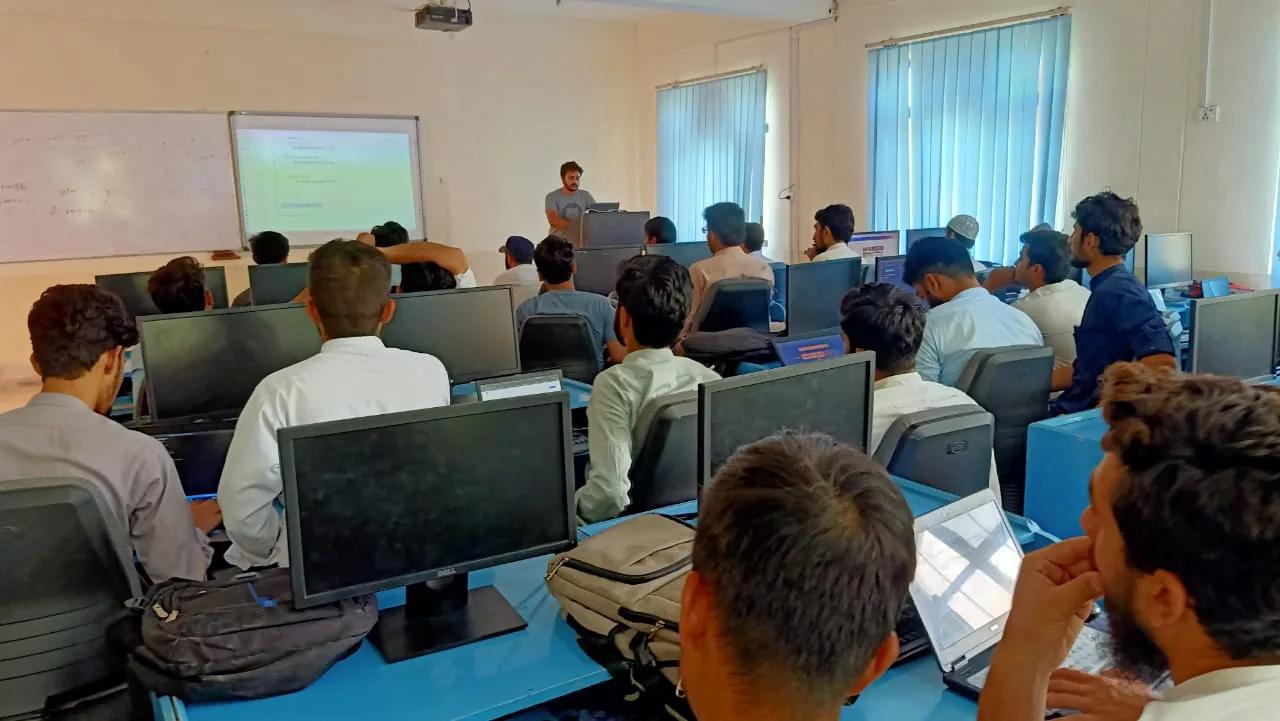
Pakistan's federal cabinet approved the National AI Policy in July 2025 with a headline goal of training one million AI professionals by 2030. Demand for AI courses has followed, and so has supply. Every week another institute advertises an "AI course", and from the outside they all look the same.
They are not the same. A good AI course changes what you can do at work within months. A poor one leaves you with a certificate and a vague memory of a chatbot demo. These are the eight questions we would ask before paying for any AI training in Pakistan, including ours.
1. Who is actually teaching?
Ask for the names of the instructors and what they have built. AI is a practical field. Someone who has trained a model on messy real data, deployed it, and watched it fail in production teaches differently from someone who has only read about it. If the institute cannot tell you who teaches the course, treat that as the answer.
2. Does the course start with Python and data, or with tools?
Courses that open with "build an AI app in one day" are selling a feeling. Real progress in AI rests on Python, on handling data, and on enough statistics to know when a result is meaningless. A serious curriculum spends its first weeks there. Python is now used by 57.9% of developers in the 2025 Stack Overflow Developer Survey, up seven percentage points in a year, largely because of AI work. It is the foundation, not an optional extra.
3. How much of the time is hands-on?
Ask what proportion of sessions are spent writing code on a computer rather than watching slides. Ask what students build. The best answer names specific projects: a classifier trained on a real dataset, a retrieval system over a set of documents, a dashboard that someone outside the class actually uses.
4. Does it cover large language models properly?
In 2026, an AI course that ignores large language models is out of date. But "covers LLMs" should mean more than prompting ChatGPT. Look for tokenisation, embeddings, retrieval-augmented generation, evaluation, and the limits of these systems. Students should leave knowing when not to use an LLM, which is as valuable as knowing how.
5. What happens after the last class?
Training that ends at the certificate leaves most people stuck. Ask what support exists afterwards: internships, project work, introductions to employers, or help finding freelance clients. In our own programmes, more than 350 graduates received a month of post-training support toward earning, because we learned that the weeks after a course decide whether the skills get used.
6. Can they show outcomes, not just enrolment?
Enrolment numbers are easy to inflate and say little. Placement and earning numbers are harder and say more. Ask for the placement rate of a specific past cohort and against what target. Our best result was 85% on the CPSE-1 programme with HOPE'87, against a 60% target. We publish it because it is a number someone can check.
7. Has anyone with a reputation to lose trusted them?
Government and international programmes audit their delivery partners. If an institute has delivered for bodies such as NAVTTC, TEVTA, or international NGOs, it has passed checks that a private student cannot easily run. It is not proof of quality, but it is evidence.
8. Is the course honest about what it will not do?
Nobody becomes an AI engineer in six weeks. A trustworthy institute will tell you what level you will reach, what you will still need to learn, and how long that usually takes. Be wary of anyone promising a job.
The short version
Choose the course where you can name the teachers, see the projects, and check the outcomes. Everything else is marketing.