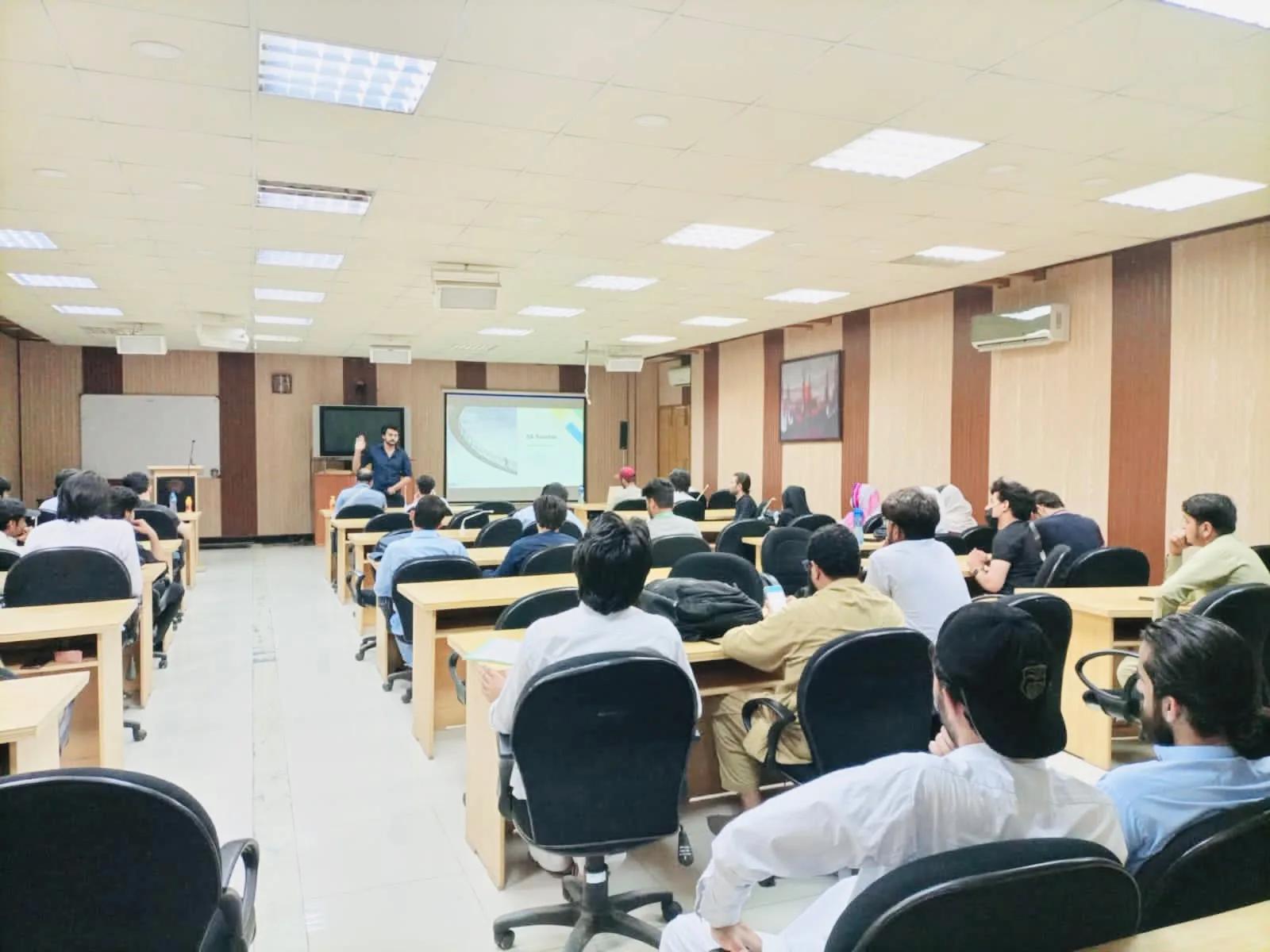
You do not need an expensive laptop, a foreign degree or a fast fibre connection to start learning machine learning in Pakistan. You need a plan, a few hours a day, and the patience to build things that do not work at first. This roadmap assumes a student or graduate starting with basic computer skills.
Month 1: Python until it feels ordinary
Learn variables, loops, functions, lists and dictionaries, then files and error handling. Write small programs every day: a marks calculator, a script that renames files, a program that reads a CSV file and prints a summary. Use free tools such as Google Colab if your own machine is slow; it runs in the browser.
The goal for the month is not cleverness. It is reaching the point where Python stops being the obstacle.
Month 2: Data handling
Learn Pandas and NumPy. Find a public dataset you care about, such as cricket scores, weather records or crop prices, and answer questions with it. Clean missing values, group and summarise, and draw charts. Most of real machine learning work looks like this month.
Month 3: Core machine learning
Using scikit-learn, train your first models: linear regression to predict a number, logistic regression and decision trees to predict a category. Learn to split data into training and test sets, and learn what overfitting looks like. Keep a notebook of every experiment and what you learned from it.
Month 4: Neural networks
Move to a deep learning framework such as PyTorch or TensorFlow. Build an image classifier, because images make mistakes obvious. Then try a simple text classifier. Do not chase the newest architecture; understand why the basic one works.
Month 5: Language models
Learn how text becomes tokens and embeddings, and use a pre-trained language model through an API or an open model. Build a small retrieval system that answers questions from a set of documents, such as your university's prospectus. Learn to test whether the answers are actually correct.
Month 6: One real project, finished
Choose one problem a real person has and solve it end to end. A shopkeeper who wants stock predictions. A clinic that wants appointment reminders sorted by urgency. A student society that wants to search its old notes. Put the code on GitHub with a clear README, and write a short post explaining what you built and what went wrong.
Habits that matter more than the syllabus
Code every day, even for thirty minutes. Read error messages fully before searching them. Explain what you learned to someone else each week; teaching exposes gaps. Join a local community or study group so you are not learning alone.
Will this get you a job?
Six months of serious work makes you employable at junior level or ready for small freelance projects, especially combined with a strong portfolio. It does not make you a senior engineer, and nobody honest will tell you otherwise. The National AI Policy's target of one million trained AI professionals by 2030 means competition will grow, so the portfolio, not the certificate, is what will set you apart.