The AI-Driven Workplace: Why Artificial Intelligence Can Take Your Job
Sawera Gulshad · · 4 min read
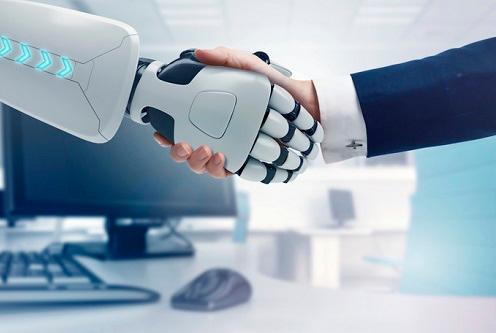
The headlines are hard to ignore. Every week, a new study or market report drops with a staggering prediction about the future of work: "AI to Automate 300 Million Jobs," "The Software Engineering Roles Replaced by Code-Gen Tools," or "The Death of Traditional Copywriting." It is easy to look at the rapid evolution of generative models and feel a lingering sense of career vertigo.
Let's address the elephant in the room with absolute candor: yes, AI can and will take over parts of your job.
However, looking at this technological shift purely through the lens of displacement misses the entire point of the human-AI paradigm. AI is coming for tasks, not inevitably your entire career. The real story isn't about replacement; it is about evolution, leverage, and the unique premium that human touch commands.
What AI is Actually Taking: The Chore, Not the Career To understand how to protect your professional value, you first have to understand what AI is actually good at. AI excels at speed, pattern recognition, data synthesis, and handling repetitive logic.
If your day-to-day role consists primarily of formatting spreadsheets, translating basic code syntax, writing formulaic emails, or aggregating standard web research, those specific tasks are highly vulnerable to automation.
But a job is rarely just a collection of repetitive tasks. A true professional brings contextual understanding, strategic judgment, and emotional intelligence to the table. AI can draft a legal contract in six seconds, but it cannot sit across from a panicked client, look them in the eye, and offer the strategic reassurance and creative litigation advice they need. AI can generate a clean code repository, but it cannot navigate the complex corporate politics required to align three different departments on a software architecture roadmap.
The "But" That Changes Everything The automation of routine tasks opens up a profound shift in how we work. Historically, technology has a track record of destroying roles while creating entirely new industries.
The Reality Shift: AI will not replace human workers. Human workers using AI will replace human workers who do not.
When the calculator was invented, mathematicians didn't go extinct; their capacity to solve larger, more complex problems skyrocketed. When automated software quality assurance testing arrived, it didn’t eliminate the need for QA specialists—it freed them from manual click-testing so they could focus on complex edge cases, architectural vulnerability, and user experience logic.
AI is the ultimate force multiplier. It takes care of the baseline heavy lifting, effectively lowering the barrier to entry for execution while raising the ceiling for creative and strategic output. Instead of spending 80% of your time on execution and 20% on strategy, AI flips the script, allowing you to act as an architect, editor, and director of your workflow.
How to Become Un-Replaceable If the nature of work is shifting from "doing" to "directing," how do you future-proof your career? The answer lies in doubling down on inherently human traits.
1. Master the Art of the "Translation" AI is only as good as the instructions it receives. The ability to look at a complex, messy, real-world human problem, break it down into logical steps, and precisely prompt or guide an AI to solve it is a premium skill. This is why domain expertise matters more than ever; you need to know what a good answer looks like to spot when an AI gives you a flawed one.
2. Cultivate Extreme Adaptability The tech stack you use today will likely look different in two years. The most valuable asset you can possess is "learnability"—the ability to rapidly absorb new tools, experiment without fear, and pivot your workflow when a more efficient system emerges.
3. Elevate Your Soft Skills Empathy, negotiation, leadership, storytelling, and cultural intuition cannot be replicated by a data model. The ability to build genuine relationships, inspire a team, and manage human conflict is—and will remain—the ultimate career shield.
The New Creative Horizon Instead of viewing AI as an adversary waiting to take your desk, view it as an incredibly eager, infinitely knowledgeable intern. It can draft the outline, run the initial numbers, or clean up the syntax, but you provide the vision, the ethics, the soul, and the final stamp of quality.
AI can take over the mundane mechanics of your job, but it gives you the freedom to finally focus on what makes your work uniquely impactful, creative, and human. The future doesn't belong to the machines; it belongs to the professionals who know exactly how to drive them.